Balto
Balto is famous for a night of it. On February 2, 1925, his team hauled a package of diphtheria serum through a whiteout into the icebound town of Nome, ending a relay that saved the community from an epidemic. The dog who led that last leg became one of history’s most celebrated animals — statue, film, the works.
Who Balto was
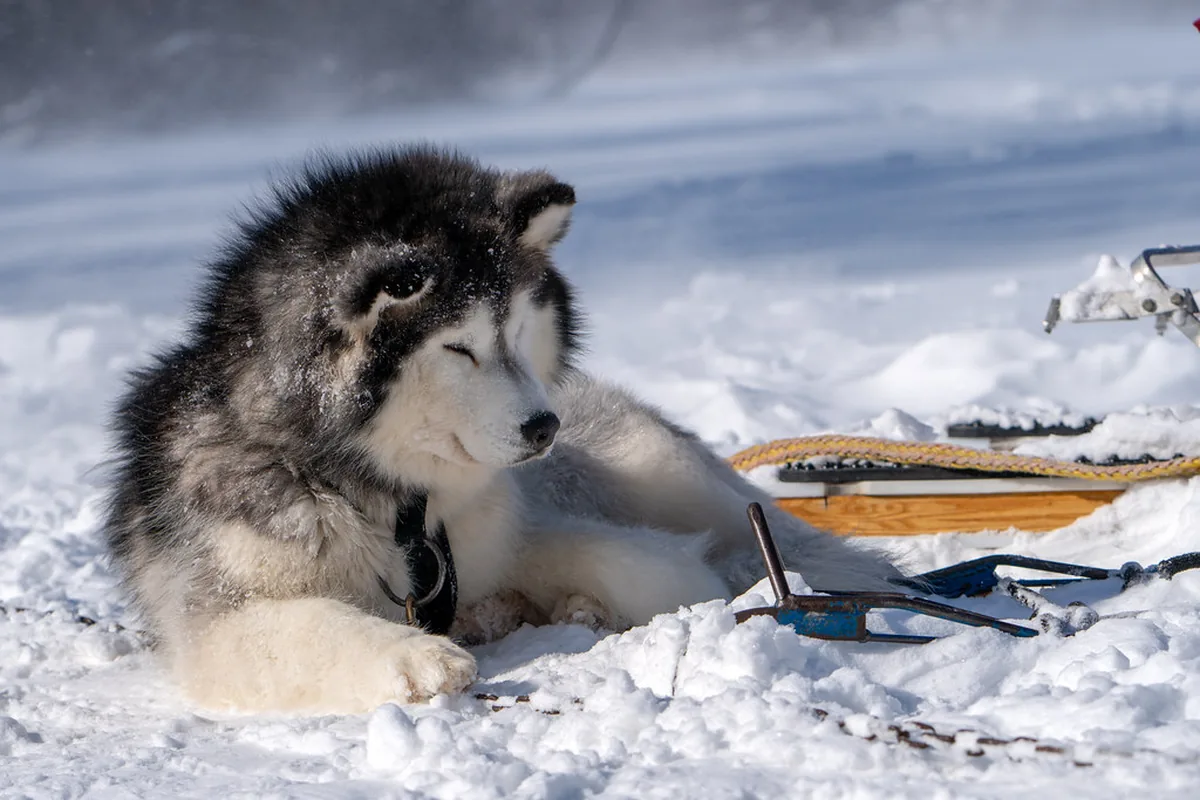
Balto was a Siberian husky, part of the sled-dog kennels of the famed musher Leonhard Seppala. On the final relay leg he was driven by musher Gunnar Kaasen. Siberian huskies were bred by the Chukchi people of northeastern Asia for exactly this work — endurance hauling in brutal cold — and the serum run was the breed’s job description under the worst possible conditions.
The serum run
When diphtheria threatened Nome in the winter of 1925 and no plane could fly in the antitoxin, teams of sled dogs relayed it nearly 700 miles from Nenana. Balto’s team ran the last stretch through a blizzard so blinding Kaasen said he often couldn’t see the dogs in front of him, and Balto kept the trail. They reached Nome early on February 2, and the outbreak was contained.
The Balto-vs-Togo story
Here’s the honest correction the history owes: Balto got the statue, but Togo did the hardest work. Togo, another of Seppala’s huskies, led the longest and most perilous leg — roughly 260 miles, including a shortcut across the breaking sea ice of Norton Sound. Balto ran the final, shorter leg into town and, because that’s where the reporters were, got the glory. Mushers have always known who the real endurance dog was; the 2019 film “Togo” finally told the wider public.
The legacy
A bronze statue of Balto was unveiled in New York’s Central Park in December 1925, less than a year after the run, and still stands. After his death Balto’s body was preserved and remains on display at the Cleveland Museum of Natural History. A 1995 animated film introduced him to a new generation. His fame endures because courage, unlike cuteness, doesn’t expire.
Balto’s full story sits alongside the other hero dogs, and he appears in the internet’s most famous dogs.
Frequently asked questions
What did Balto do?
Balto was a Siberian husky who led the sled-dog team that carried diphtheria antitoxin on the final leg into Nome, Alaska, during the 1925 serum run, helping stop an epidemic.
Was Balto or Togo the real hero?
Both were essential. Balto led the final leg into Nome and got the fame, but Togo led the longest and most dangerous stretch of roughly 260 miles. Many historians consider Togo the greater endurance dog.
Where is Balto’s statue?
A bronze statue of Balto has stood in New York’s Central Park since December 1925. Balto’s preserved body is on display at the Cleveland Museum of Natural History.